
Beijing VJTBio Co., Ltd. (hereinafter referred to as "VJTBio") is a "Little Giant" SME deeply engaged in the field of innovative animal pharmaceuticals. The company's independently developed canine anti-PD-1 monoclonal antibody was out-licensed through an exclusive license to Jenga Biosciences, Inc., a US-based clinical-stage veterinary oncology company. Jenga Biosciences obtained the rights to develop, manufacture, and commercialize the product in global markets outside of China. This successful out-licensing of a PCC-stage (preclinical candidate) pet antibody drug pipeline marks a global transformation of technological achievements and demonstrates that China's R&D capabilities in innovative animal pharmaceuticals have gained international recognition. The success of this transaction was driven by the company’s preemptive patent strategy, with a Chinese patent (ZL 2023 1 1658628.6) rapidly granted through the patent pre-examination mechanism serving as a key pillar throughout the transaction.
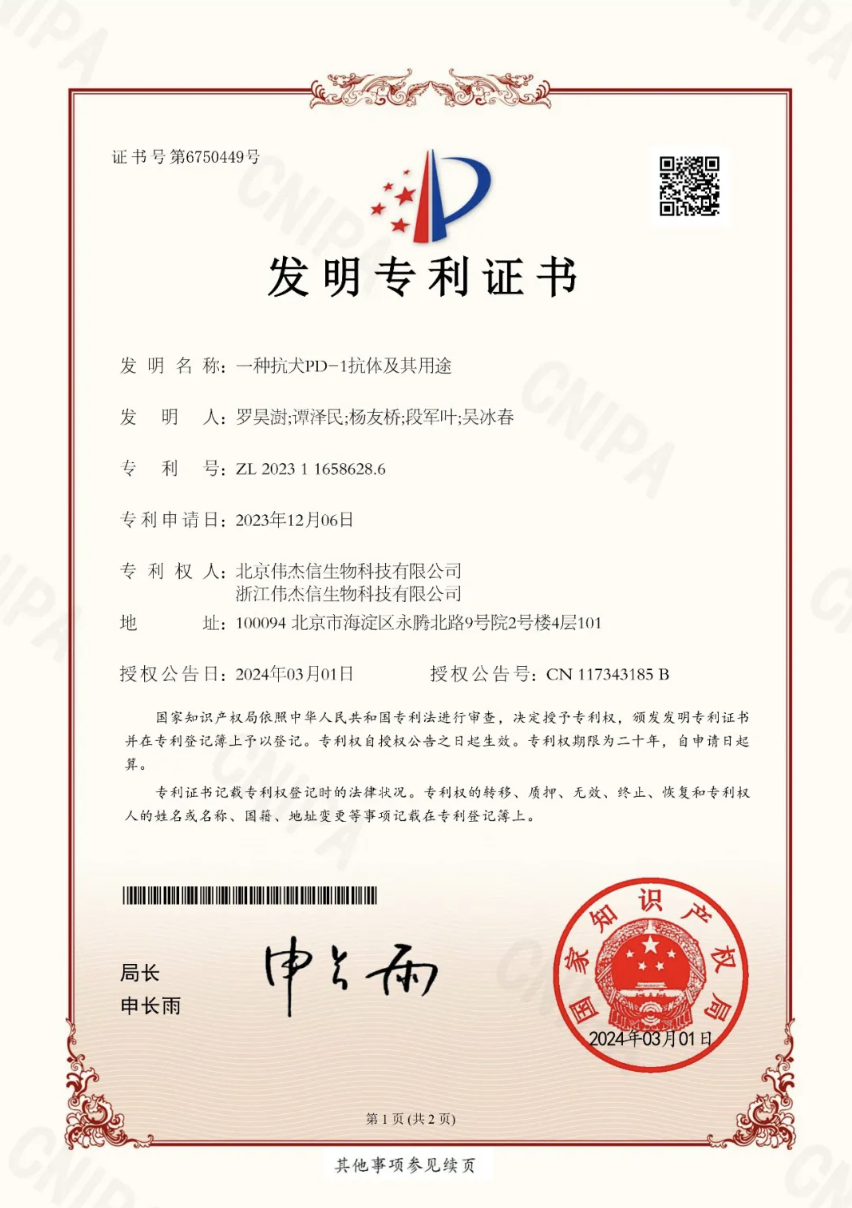
For the core technology of the canine anti-PD-1 monoclonal antibody, VJTBio secured domestic intellectual property protection through the patent pre-examination mechanism immediately upon achieving key research milestones. After the R&D progressed to the PCC stage, VJTBio launched a strategic global IP portfolio, building a comprehensive IP protection matrix around key areas such as antibody sequences, epitopes, and preparation methods. Simultaneously, leveraging the Chinese patent (ZL 2023 1 1658628.6) as a priority document, the company filed patent applications in major international markets including the US, Europe, and Japan, forming a globalized protection network. The Chinese patent (ZL 2023 1 1658628.6) served as the core basis for FTO (freedom-to-operate) analysis and due diligence, clearly defining technical rights and effectively reducing the risk of infringement in the transaction. Additionally, the patent's stability was validated through "stress tests" including invalidation simulations and infringement litigation scenarios, laying a solid foundation for the overseas licensing of this PCC-stage pet antibody drug.
The VJTBio case fully demonstrates the multidimensional value of core patents in technology commercialization. The company deployed its patent strategy throughout key stages including global patent portfolio, transaction compliance, and risk validation. By leveraging the expedited pre-examination grant mechanism, the company transformed patents from mere "technical protection tools" into "engines of business collaboration."
This case offers an important reference for innovative enterprises: plan IP strategy alongside technology development in the early stages, focus on comprehensive patent protection for core technologies, make good use of the patent pre-examination mechanism to first secure priority rights for core technologies, and then expand into target markets through international patent filings. By deeply leveraging patents to support business negotiations, reduce collaboration risks, and enhance asset value, enterprises can effectively drive the market-oriented and globalized transformation of innovative outcomes, helping them gain competitive advantages in cross-border collaborations.